Forager
Food · Sustainability
01
//
Overview
We aim to promote regional foodways and ecological knowledge by identifying and cataloging edible plant species within a structured and database. Forager will feature 15 edible plants, including mesquite, prickly pear, wolfberry, palo verde beans, cholla buds, jojoba, agave, desert chia, amaranth, saguaro, desert willow, yucca, ironwood, barrel cactus, and ocotillo. These plants vary in habitat, growth cycles, harvestable components, and practical applications.
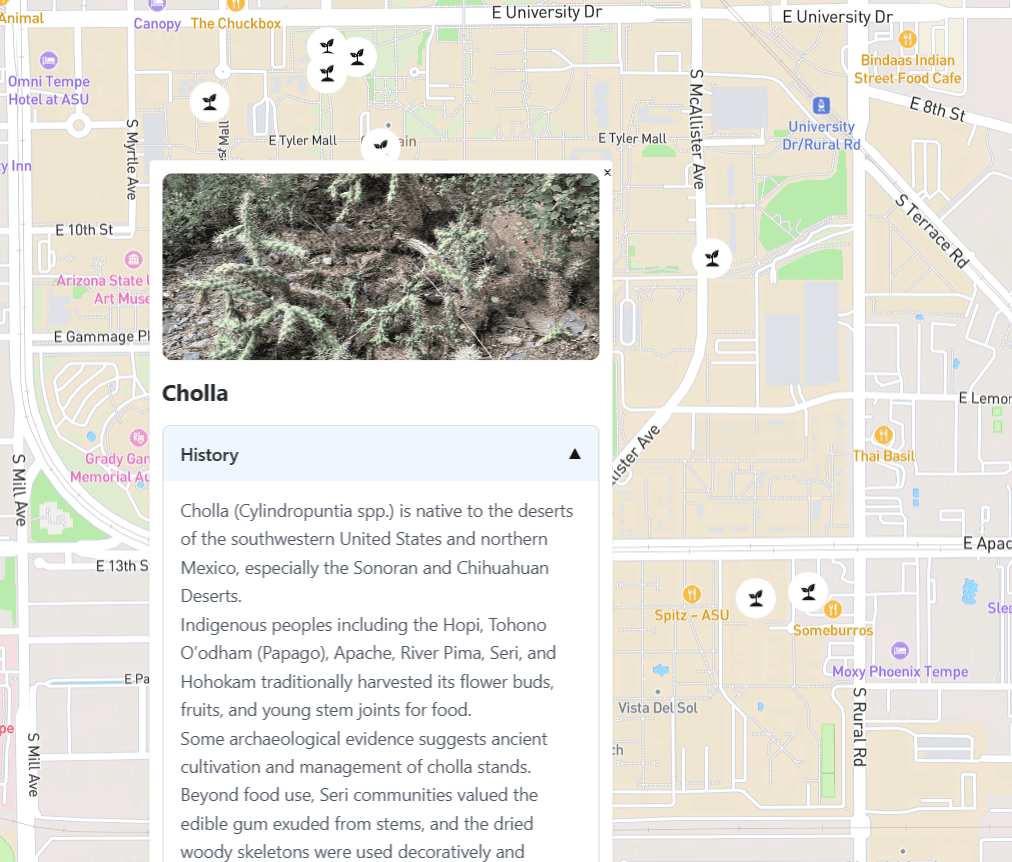
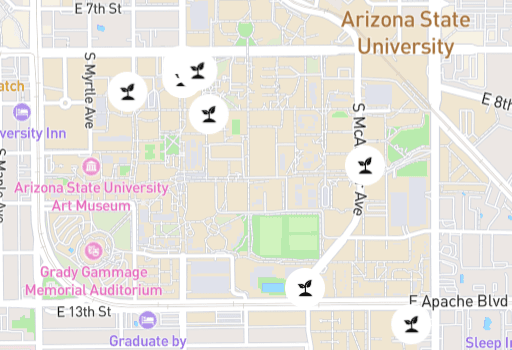
Initially focused on the ASU Tempe campus and surrounding areas, the platform is designed to scale across the broader Phoenix metropolitan region. Many existing foraging databases rely heavily on community-sourced contributions, which can introduce inconsistencies or outdated information. Forager addresses this gap by providing verified data on plant identification, toxicity, safety considerations, harvesting seasonality, and preparation methods. In addition, the platform incorporates historical context and documented uses to provide a more comprehensive understanding of each species.
Forager is also designed to highlight local community engagement by incorporating recipes, user contributions, and partnerships with regional organizations. This ensures that the platform remains dynamic, relevant, and grounded in real-world application while supporting broader awareness of local ecosystems and food systems.
Our research process involved extensive review of academic literature through ASU databases and Google Scholar. The first phase focused on foundational research and identifying potential collaborators, while the second phase involved benchmarking existing databases and compiling detailed plant profiles. This included curating recipes and preparation methods to support users interested in incorporating foraged ingredients into their meals.
Forager
Food · Sustainability
01
//
Overview
We aim to promote regional foodways and ecological knowledge by identifying and cataloging edible plant species within a structured and database. Forager will feature 15 edible plants, including mesquite, prickly pear, wolfberry, palo verde beans, cholla buds, jojoba, agave, desert chia, amaranth, saguaro, desert willow, yucca, ironwood, barrel cactus, and ocotillo. These plants vary in habitat, growth cycles, harvestable components, and practical applications.
Initially focused on the ASU Tempe campus and surrounding areas, the platform is designed to scale across the broader Phoenix metropolitan region. Many existing foraging databases rely heavily on community-sourced contributions, which can introduce inconsistencies or outdated information. Forager addresses this gap by providing verified data on plant identification, toxicity, safety considerations, harvesting seasonality, and preparation methods. In addition, the platform incorporates historical context and documented uses to provide a more comprehensive understanding of each species.
Forager is also designed to highlight local community engagement by incorporating recipes, user contributions, and partnerships with regional organizations. This ensures that the platform remains dynamic, relevant, and grounded in real-world application while supporting broader awareness of local ecosystems and food systems.
Our research process involved extensive review of academic literature through ASU databases and Google Scholar. The first phase focused on foundational research and identifying potential collaborators, while the second phase involved benchmarking existing databases and compiling detailed plant profiles. This included curating recipes and preparation methods to support users interested in incorporating foraged ingredients into their meals.