Aeroterra
Built Environment · Energy · Material Science
01
//
Overview
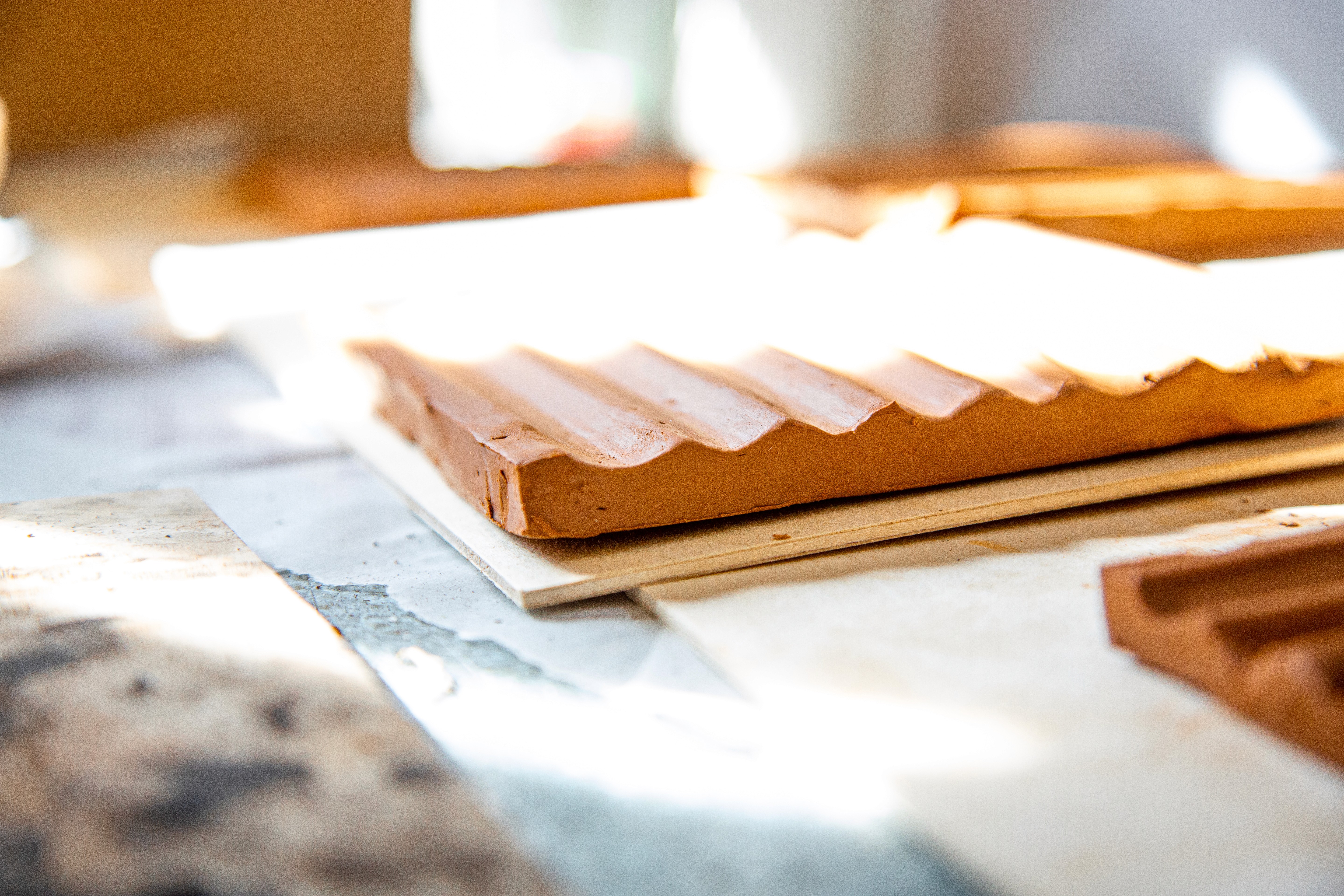
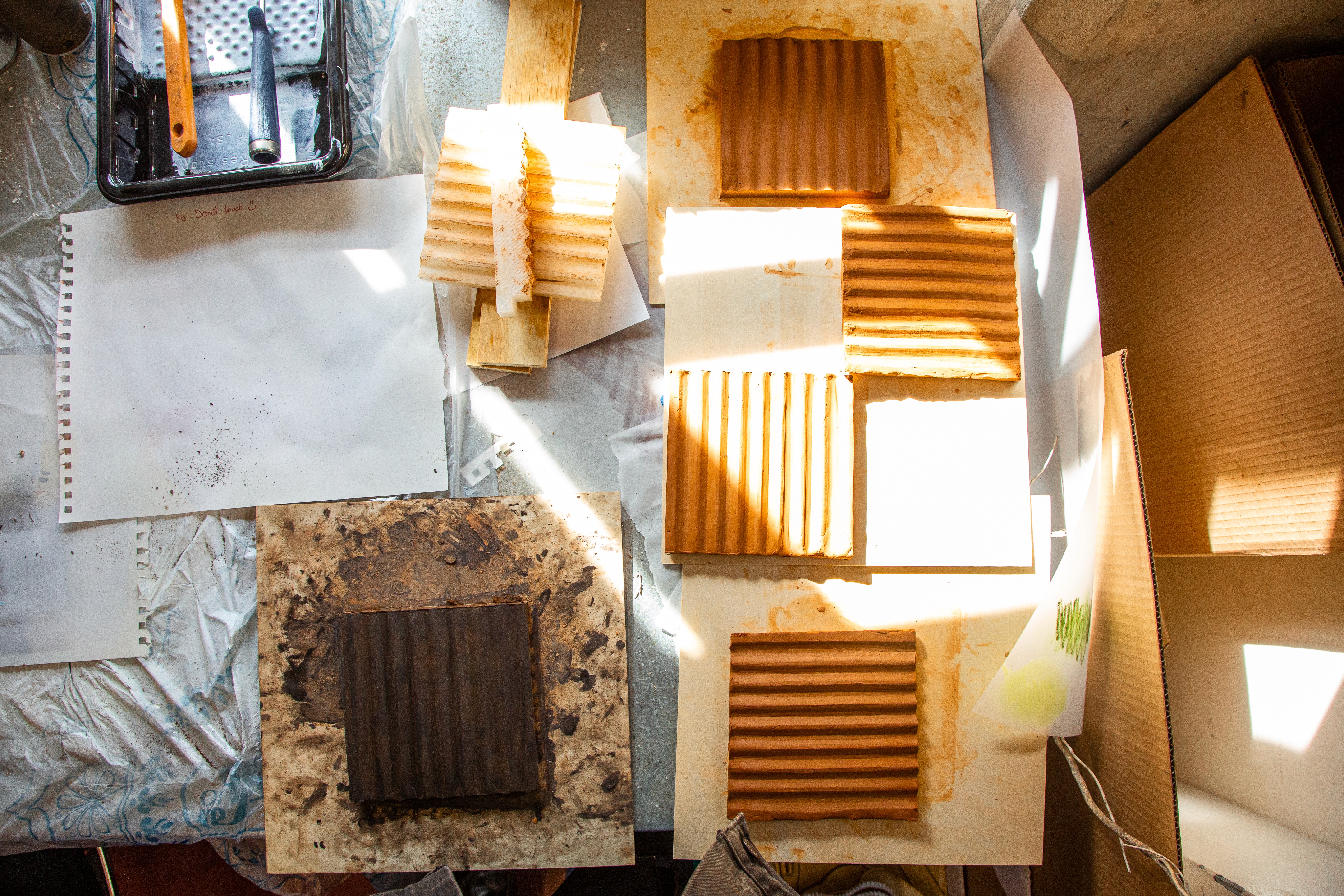
The research team has produced multiple fired tiles that test how glaze chemistry can support local bird species while maintaining thermal performance. Their material studies include burnout additives that influence porosity and water absorption, as well as mineral compounds such as manganese dioxide that may increase evaporation through controlled heat gain. HVAC runoff data informs the water budget for adaptive cooling, ensuring that condensate alone can supply the moisture required for continuous performance.
The project incorporates LEED‑aligned sustainability strategies and evaluates long‑term constructability through collaboration with construction management students who study installation sequencing, maintenance cycles, and building logistics. AeroTerra positions terracotta as a contemporary environmental technology that merges thermal regulation, ecological support, and material expression into a single architectural assembly. Through the integration of ceramic science, environmental design, and construction logic, the system proposes a new model for climate‑responsive facades that work with natural and mechanical water flows rather than against them
Aeroterra
Built Environment · Energy · Material Science
01
//
Overview
The research team has produced multiple fired tiles that test how glaze chemistry can support local bird species while maintaining thermal performance. Their material studies include burnout additives that influence porosity and water absorption, as well as mineral compounds such as manganese dioxide that may increase evaporation through controlled heat gain. HVAC runoff data informs the water budget for adaptive cooling, ensuring that condensate alone can supply the moisture required for continuous performance.
The project incorporates LEED‑aligned sustainability strategies and evaluates long‑term constructability through collaboration with construction management students who study installation sequencing, maintenance cycles, and building logistics. AeroTerra positions terracotta as a contemporary environmental technology that merges thermal regulation, ecological support, and material expression into a single architectural assembly. Through the integration of ceramic science, environmental design, and construction logic, the system proposes a new model for climate‑responsive facades that work with natural and mechanical water flows rather than against them