Pylon
Space Exploration
01
//
Overview
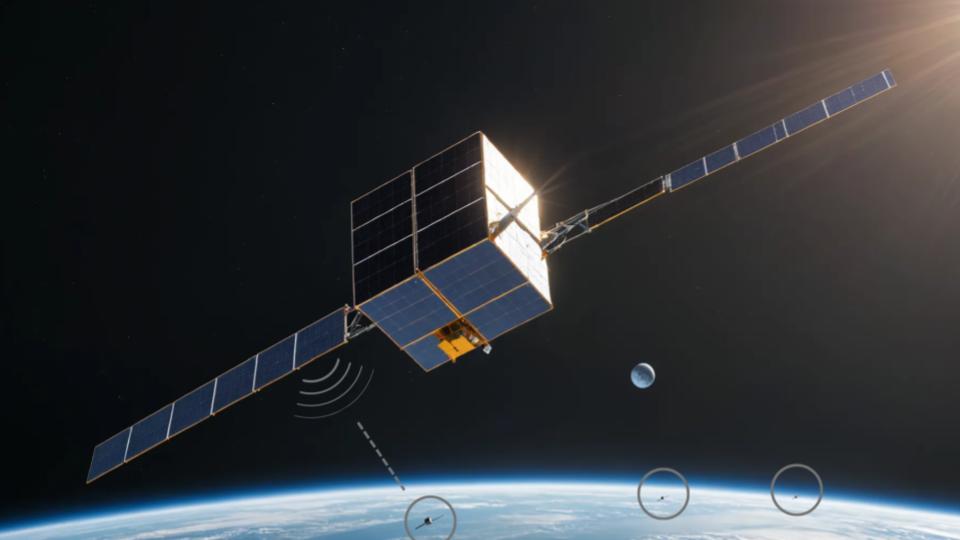
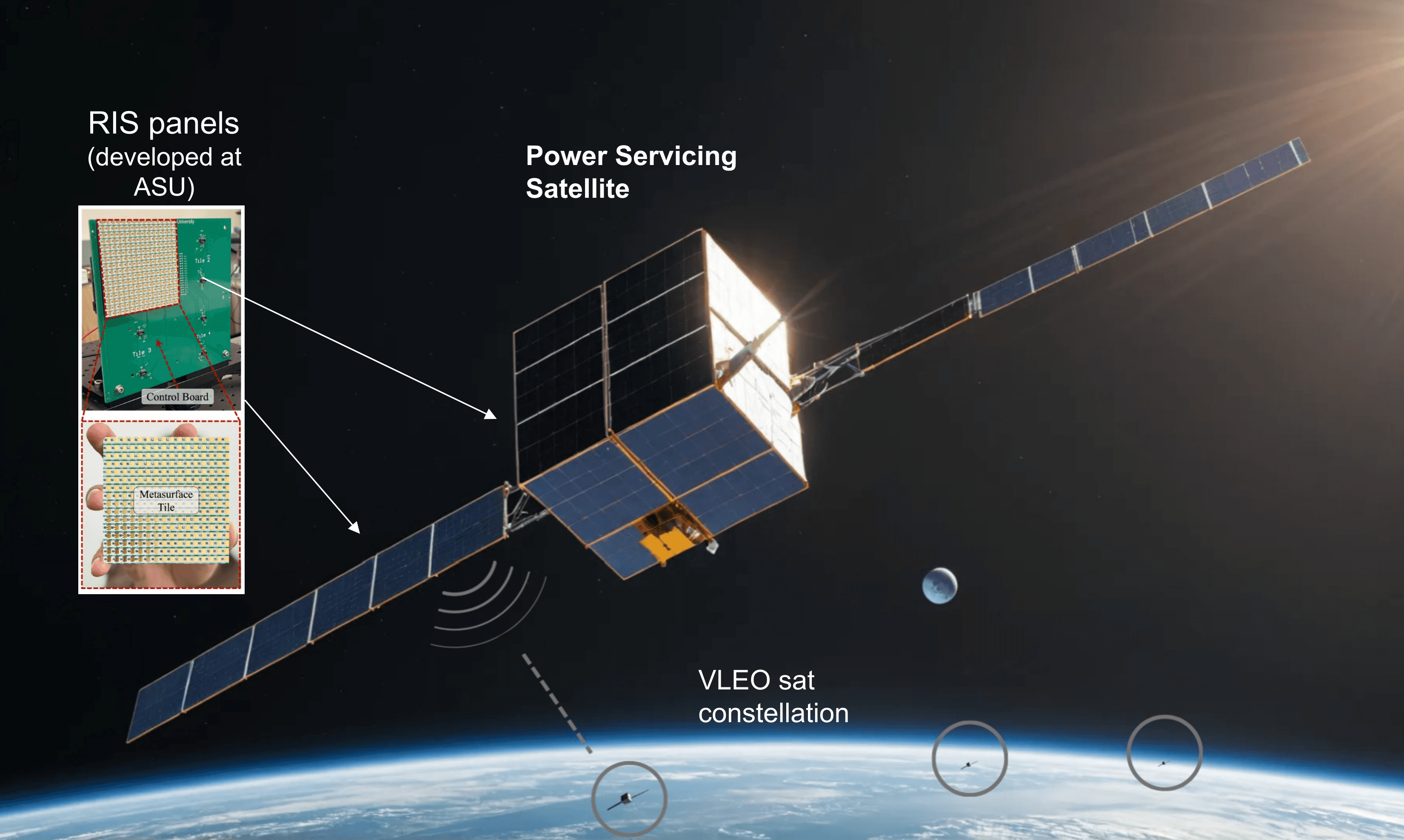
Reconfigurable Intelligent Surfaces (RIS) are an active area of research for wireless communications and are emerging as a potential candidate for the next generation of wireless power transfer (WPT). RIS have demonstrated the ability to enable accurate control of the beam direction, greater signal quality, and energy efficiency when compared to traditional transmitter designs. The advancement of this technology has the potential to enable satellite-to-satellite WPT, allowing for new satellite mission architectures for both military and civilian satellites - creating a “Starlink” like constellation, but for power instead of communication. Furthermore, the advancement of this technology has dual-use applications, including smart infrastructure, autonomous vehicles, and IoT devices.
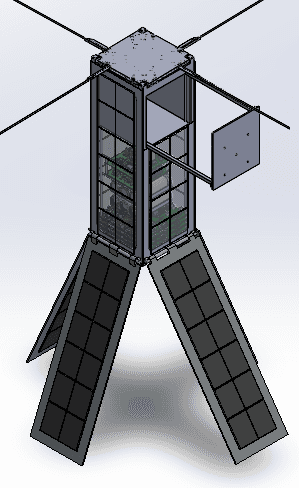
Pylon is launching the first flight demonstration an RIS in 2027 on a CubeSat platform to test dynamically steering energy from a transmitter to a receiver. As global power demand continues to rise, traditional methods of space-based power transmission such as fixed tethers or large RF systems are limited by cost and inefficiency. To address this, the system leverages metasurface-based beamforming to concentrate and redirect RF energy more efficiently, enabling a flexible and scalable solution for power delivery.
Pylon
Space Exploration
01
//
Overview
Reconfigurable Intelligent Surfaces (RIS) are an active area of research for wireless communications and are emerging as a potential candidate for the next generation of wireless power transfer (WPT). RIS have demonstrated the ability to enable accurate control of the beam direction, greater signal quality, and energy efficiency when compared to traditional transmitter designs. The advancement of this technology has the potential to enable satellite-to-satellite WPT, allowing for new satellite mission architectures for both military and civilian satellites - creating a “Starlink” like constellation, but for power instead of communication. Furthermore, the advancement of this technology has dual-use applications, including smart infrastructure, autonomous vehicles, and IoT devices.
Pylon is launching the first flight demonstration an RIS in 2027 on a CubeSat platform to test dynamically steering energy from a transmitter to a receiver. As global power demand continues to rise, traditional methods of space-based power transmission such as fixed tethers or large RF systems are limited by cost and inefficiency. To address this, the system leverages metasurface-based beamforming to concentrate and redirect RF energy more efficiently, enabling a flexible and scalable solution for power delivery.