BlueMatter
Biometrics · Robotics · AI

01
//
Overview
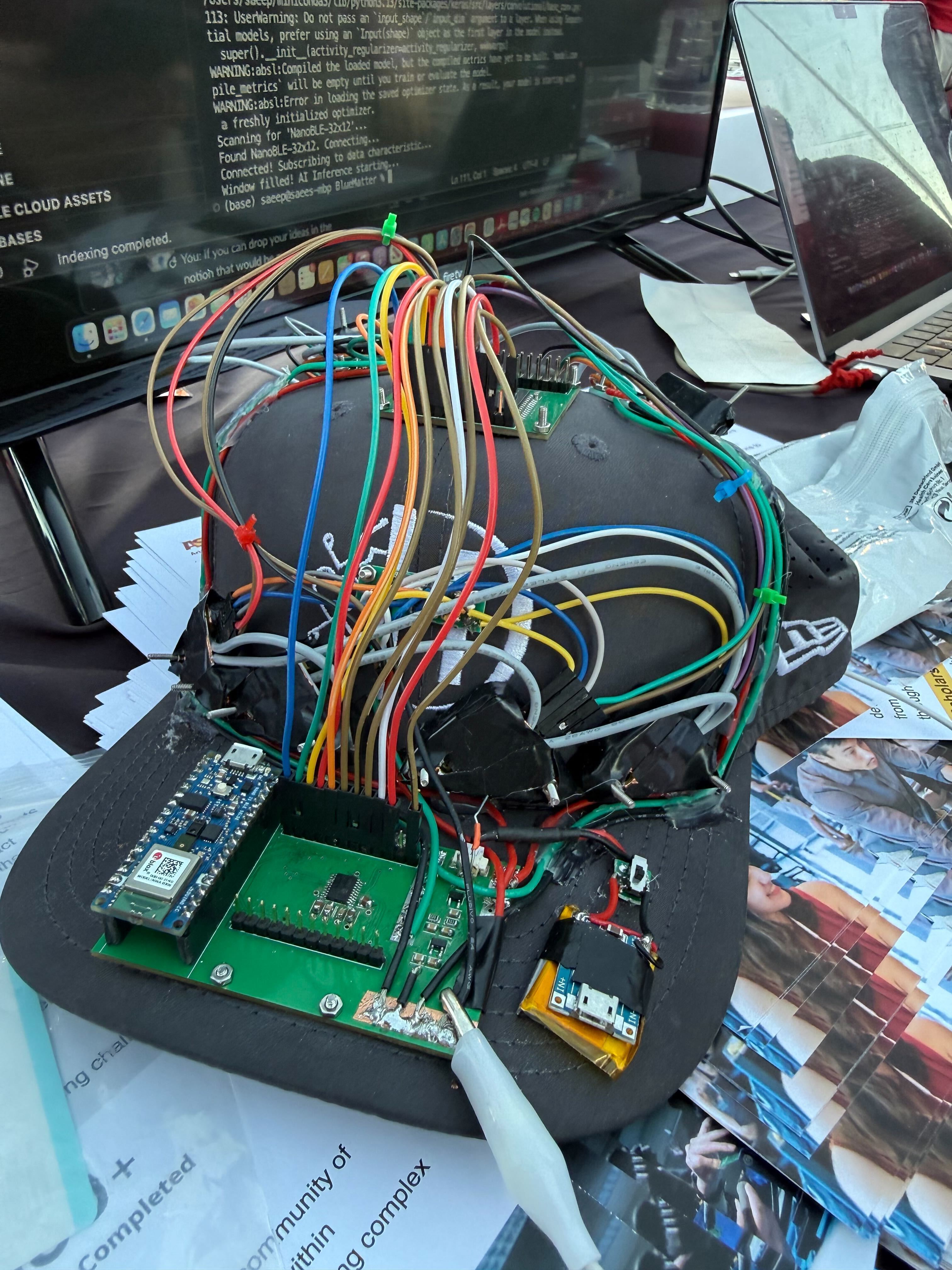
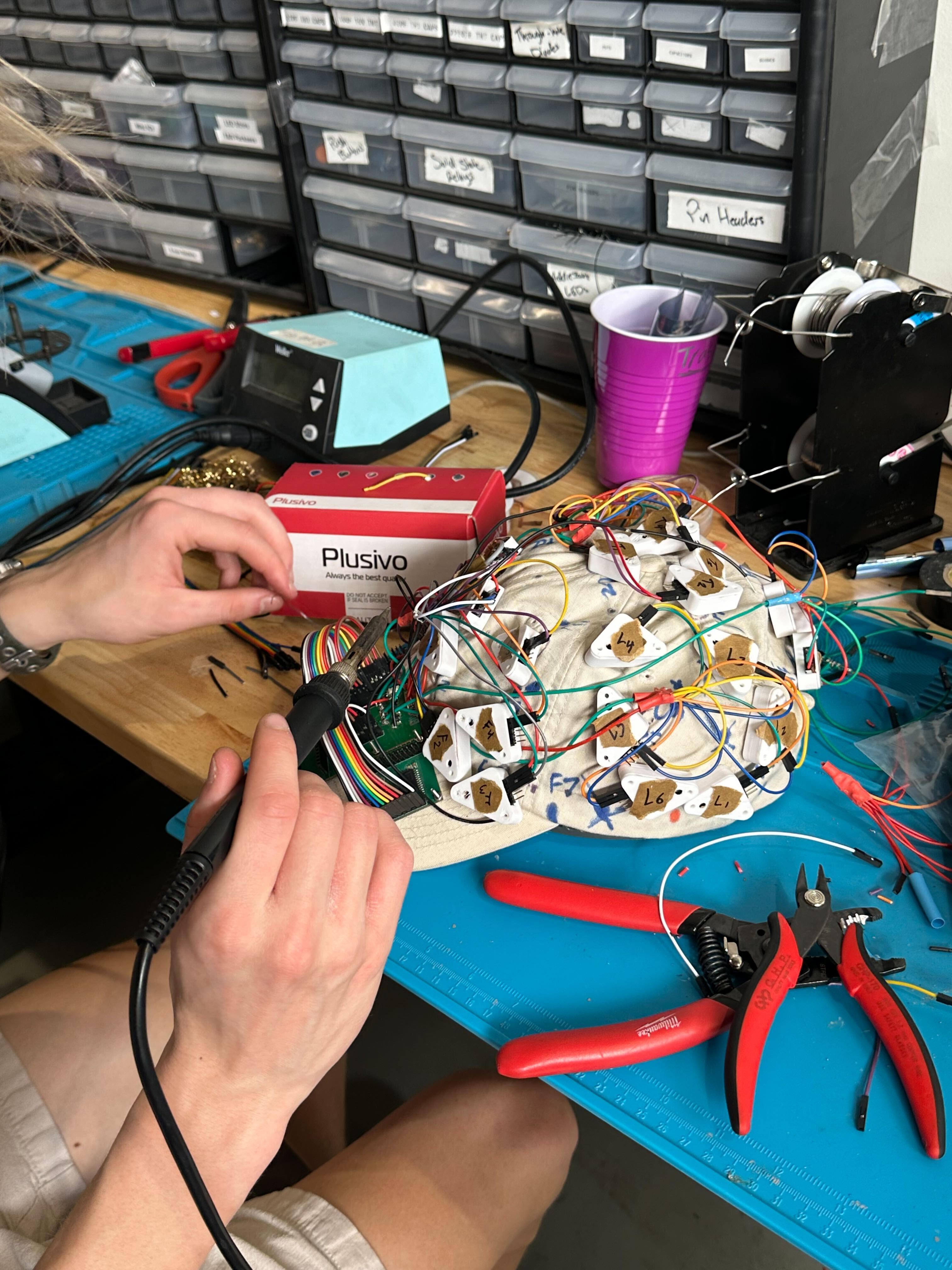
The BlueMatter project is focused on developing a custom electroencephalogram (EEG) device and an original machine-learning focused signal processing pipeline to advance the technology readiness level of general purpose, non-invasive BCIs. Our pipeline will use a synthesis of denoising techniques to clean raw EEG data and a novel machine learning architecture to classify EEG signals as intended actions. This framework would allow for improved performance relative to existing devices, while also allowing for the use of lower cost electronics and sensors.
Devices like these could be used in a variety of use cases, from prosthetic limb control to the operation of industrial machinery. They would also be easy to use and cheap to repair, allowing for anyone to effortlessly use them without the need for extensive training or expertise. Furthermore, said devices would be visually discreet and socially acceptable with regard to style, taking on the form of a casual hat or headband. This would allow for the device to fit in as mainstream consumer technology, bringing the benefits and capabilities of BCI technology out of the lab, and into daily life.
BlueMatter
Biometrics · Robotics · AI
01
//
Overview
The BlueMatter project is focused on developing a custom electroencephalogram (EEG) device and an original machine-learning focused signal processing pipeline to advance the technology readiness level of general purpose, non-invasive BCIs. Our pipeline will use a synthesis of denoising techniques to clean raw EEG data and a novel machine learning architecture to classify EEG signals as intended actions. This framework would allow for improved performance relative to existing devices, while also allowing for the use of lower cost electronics and sensors.
Devices like these could be used in a variety of use cases, from prosthetic limb control to the operation of industrial machinery. They would also be easy to use and cheap to repair, allowing for anyone to effortlessly use them without the need for extensive training or expertise. Furthermore, said devices would be visually discreet and socially acceptable with regard to style, taking on the form of a casual hat or headband. This would allow for the device to fit in as mainstream consumer technology, bringing the benefits and capabilities of BCI technology out of the lab, and into daily life.